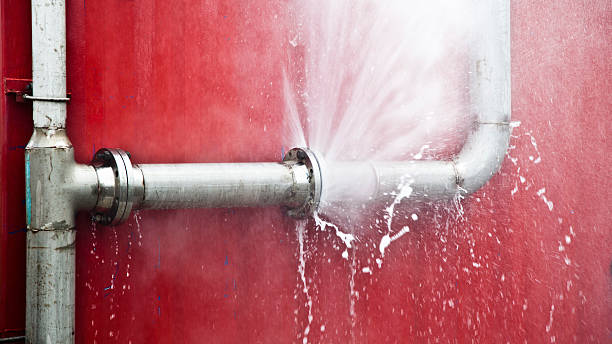
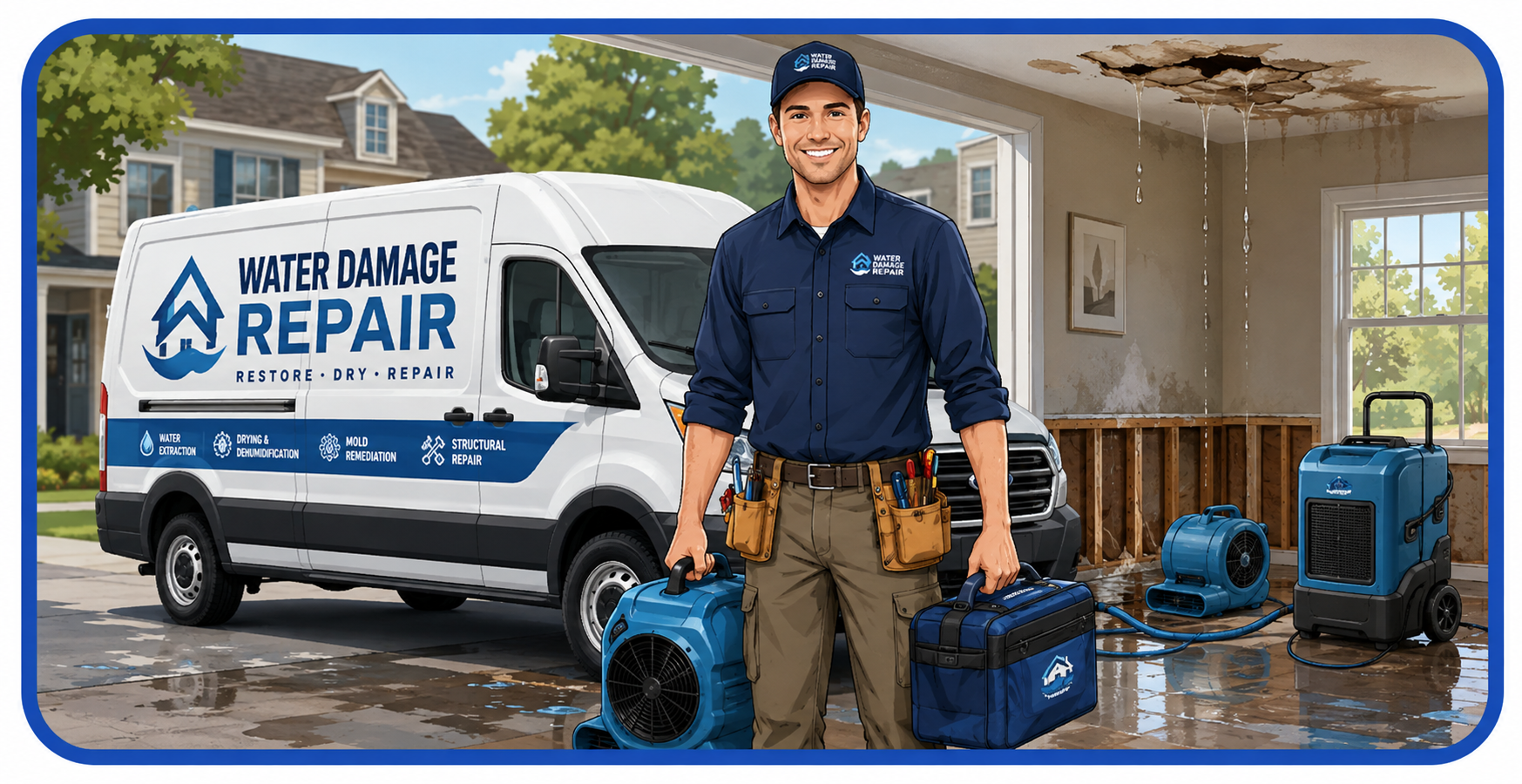
A toilet supply line that lets go, a water heater that finally gives out, a storm that pushes water under the door: whatever started it, one call to A Water Damage connects you with an independent, licensed and insured contractor working in Mercer County.
Free referral. No obligation until you approve a written estimate from the contractor.
Independent pros in the network cover zip codes like .

Carpet pad soaks through in minutes, drywall wicks water upward within hours, and the 24 to 48 hour mark is when mold starts to become a serious concern.
We are a referral line, not a restoration company. When you call A Water Damage from anywhere in Mercer County, you get routed to an independent local contractor who handles the extraction, drying, and repairs directly with you.
Nobody plans for a flood. Most calls start with a split washer hose, a toilet that would not stop running, or a sump pump that quit mid-storm. The person calling is usually ankle-deep in it and has no idea which company to call. Getting them to a qualified local pro quickly is the whole point of this line.
The contractors in the network are independent businesses. They set their own prices, carry their own licenses and insurance, and stand behind their own work. Many hold IICRC training in water damage restoration and applied structural drying, and they show up with the gear the job needs: truck-mounted or portable extractors, commercial dehumidifiers, air movers, pin and pinless moisture meters, and thermal imaging cameras that spot wet framing behind finished walls.
Whoever you are connected with, confirm license and insurance details for your job directly with the pro before work begins. A good contractor will happily show you both, walk you through the moisture readings, and give you a written estimate before anything gets torn out.

Not every leak announces itself with a puddle. Some of the most expensive water damage jobs start as a faint stain or a slightly soft spot near a baseboard. If you notice any of the signs below, call before it spreads.
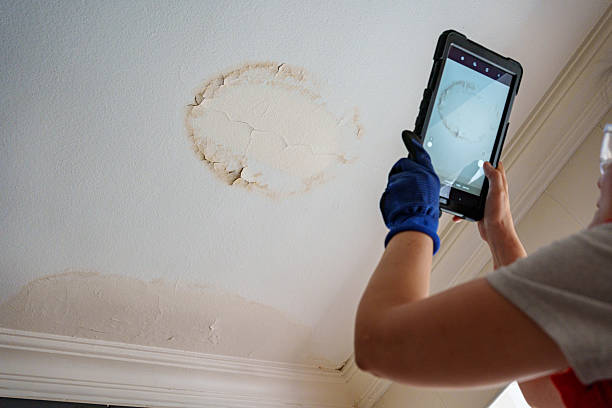
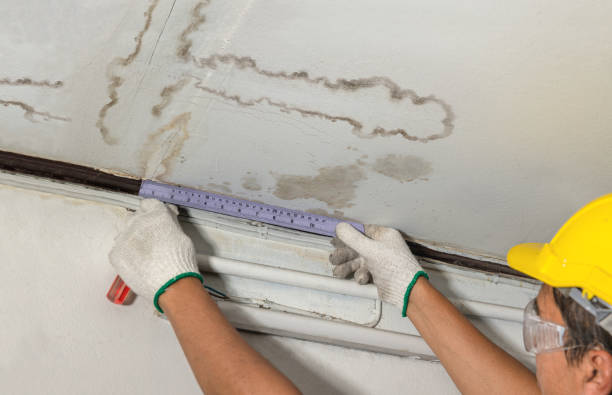
A brown tide line, paint that blisters, or drywall that dents under your thumb all mean water has climbed into the wall cavity and needs to be dried from the inside.
If the room still smells damp days after the visible water is gone, moisture is hiding under the floor or inside the wall, and mold may not be far behind.
When boards curl up at the sides or laminate starts to tent at the joints, water has soaked into the subfloor and the floor will keep moving until it is properly dried.
If the water meter keeps turning with every tap closed, a pipe is leaking somewhere inside the walls, under the slab, or in the yard.
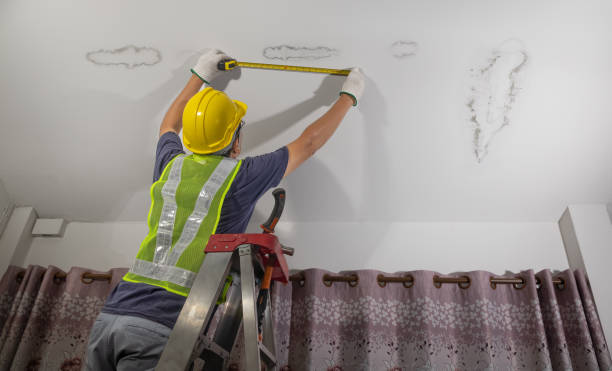
Yellow-brown rings or a bulge in the ceiling mean water is collecting above. Do not puncture it yourself, and keep people out of the room until a pro checks it.
Visible water on the floor, in the basement, or around the water heater is the obvious one, but how fast it is removed decides how much of the floor, drywall, and cabinetry can be saved.
Water damage repair is really three jobs back to back: get the water out, get the structure dry, then put the home back together. The independent contractors you reach through this line handle all three, so you are not juggling a separate extraction company, drying company, and remodeler.

The first job on an emergency call is to stop the water and make the space safe. After that, the pro photographs everything, takes moisture readings, and starts pulling water with truck-mounted or portable extractors. On carpeted floors, weighted extraction tools squeeze water out of the pad, which shortens the drying phase and gives the carpet a much better chance of being saved.
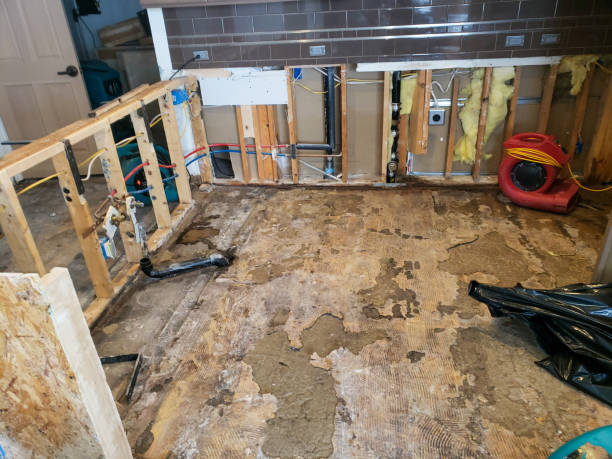
Houses fail in predictable ways: supply lines under sinks, water heaters at the end of their life, dishwasher hoses, ice maker lines, and toilet fill valves. Independent pros in the network handle the full arc, from removing wet drywall and insulation to drying the framing, treating for microbial growth, and rebuilding with new drywall, paint, baseboards, and flooring.
For businesses, downtime is the real expense. Commercial contractors bring bigger equipment, including desiccant dehumidifiers that handle large volumes of air, and they can plan the work in phases so you can keep part of the building open. Daily moisture logs give your landlord or insurance adjuster a clear paper trail.
Drying is a science, not a box fan in the doorway. Pros set up a closed drying chamber, place air movers to push air across wet surfaces, and run low-grain refrigerant dehumidifiers to pull moisture out of the air. They check readings every day and adjust until framing, subfloor, and drywall reach dry standard, which is the moisture level of unaffected materials in the same home.
Mold can begin growing within 24 to 48 hours on wet drywall, wood, and carpet backing. Contractors apply EPA-registered antimicrobials to affected surfaces, remove porous materials that cannot be dried in time, and use HEPA air scrubbers when there is a risk of spores spreading to other rooms.
Not all water is the same. A sewage backup or river flooding is Category 3 water and requires protective equipment, removal of contaminated materials, and disinfection. Slab leaks need electronic leak detection. Crawl spaces need wet insulation pulled and vapor barriers replaced. Describing the situation on the call helps match you with the right specialist.
Do not wait for the morning. Independent pros can start extraction tonight.
When water is on the floor, you need a short path to help. Here is what happens after you call.
When you call +1-877-637-9008, you will be asked a few quick questions: what failed, which rooms are wet, and roughly when it started. Those answers help route you to the right local contractor.
The contractor confirms your address, gives you an arrival window, and may walk you through shutting off the main water valve or the breaker to a wet room while you wait.
On site, the pro maps moisture with meters and thermal imaging, classifies the water category, photographs the damage, and gives you a written estimate before any work begins.
Once you approve, extraction and drying begin. The contractor monitors daily until materials hit dry standard, then handles repairs. You get the moisture logs and photos for your insurance claim.

When you are dealing with a flood, you want someone who answers, someone who shows up, and someone who explains the bill. That is the standard independent contractors in the network are held to.
You are connected with independent contractors who carry their own licensing and insurance. Ask to see both before work begins, and any good pro will show you on the spot.
Calls are answered around the clock. Since the pros already work in Mercer County, arrival is often quick, sometimes inside an hour, depending on demand and distance.
Pricing is discussed and written down before work begins. Many pros bill using the same estimating software insurance adjusters use, so the numbers line up and your claim moves faster.
The pros work cities and towns throughout Mercer County, so they know the common pipe materials, typical basement and crawl space setups, and how local storms tend to hit.
There is no fee for the referral and no commitment from you. You decide whether to hire the contractor after you see their written quote.
Contractors document the loss with dated photos, moisture maps, and daily drying logs. That paper trail is exactly what adjusters look for, and it protects you if a claim gets questioned later.
Every water loss is different, but the feedback tends to circle back to the same things: someone answered, someone showed up, and the price matched the quote.

The water heater gave out late on a Sunday and soaked the garage and laundry room. The pro I was connected with arrived in under an hour, extracted everything that night, and had drying equipment running before he left. Straightforward and honest.
Dana R.Water heater failure, garage and laundry roomThe thermal camera picture is what got me. The wall looked fine, but it was soaked two feet up. They cut out the bottom section, dried the framing in about four days, and showed me the meter readings every visit.
Marcus T.Supply line leak behind hallway wallWe run a small dental office and a pipe burst over a weekend. The contractor worked in sections so we only lost one day of appointments, and the drying logs made our insurance claim painless.
Priya S.Commercial office, burst pipeThree inches of water in the finished basement after the sump quit. They saved the carpet but replaced the pad, sprayed antimicrobial on the walls, and gave me a written price before touching anything.
Jim and Carla W.Basement flood, failed sump pumpOur dishwasher had been leaking quietly and the laminate started lifting. The contractor found water under the cabinets too, removed the toe kicks to dry underneath, and saved the cabinets.
Alicia M.Hidden dishwasher leak, kitchenUpstairs toilet overflowed and came through the dining room ceiling. The contractor checked the ceiling, drained it safely, dried the joists, and handled the drywall and paint. You cannot even tell it happened.
Ben K.Toilet overflow, ceiling damage
These are the questions that come up on almost every call. For anything else, the line is open.
Arrival times vary with distance and demand, but local contractors often reach you within an hour or two. You will get an arrival estimate when the contractor calls you back.
The contractor gives you a written quote after inspecting the damage and before any work starts. The referral is free, and you choose whether to move forward.
Common emergency services include water extraction, drying setup, sewage cleanup, tarping, and board-up. Describing the situation clearly helps match you with a pro who has the right equipment.
Most policies cover sudden and accidental water damage, like a burst pipe or a failed water heater, but not gradual leaks or outside flooding unless you carry flood insurance. Contractors provide photos, moisture readings, and drying logs to support your claim. Check your own policy details with your agent.
Most structural drying jobs take three to five days. Dense materials like hardwood, plaster, and concrete can take longer. The contractor checks readings daily and removes equipment only when materials reach dry standard.
Turn off the water at the main shutoff, kill power to affected rooms at the panel, lift furniture and electronics off the floor, and photograph everything. Avoid sagging ceilings and never use a regular vacuum on water.
Not always. Supply line water starts clean, but appliance discharge carries bacteria, and sewage or floodwater is heavily contaminated. Wait for the pro to classify it, and avoid contact if you are not sure.
Carpet hit by clean water can often be dried in place, with only the pad replaced. If the water was contaminated, the carpet and pad both need to go for health reasons.
A musty smell, dark spotting on walls or baseboards, or allergy-type symptoms that get worse at home are common signs. Contractors can check moisture levels and, where needed, recommend mold testing by an independent assessor.
No. We are a referral line that connects callers with independent local contractors. The contractor you hire handles the work, the pricing, and the warranty. Please verify their license and insurance before work starts.
Calls are routed across Mercer County, including smaller towns. Check the city and zip code list at the bottom of the page for common service areas.
Describe what you are seeing and the contractor will tell you what makes sense.
Contractors in the network work throughout Mercer County, from the county seat to outlying towns and unincorporated areas. Calls are routed to a pro close to your address to keep drive times short.
The table below lists cities in Mercer County and the zip codes contractors serve most often, including .